
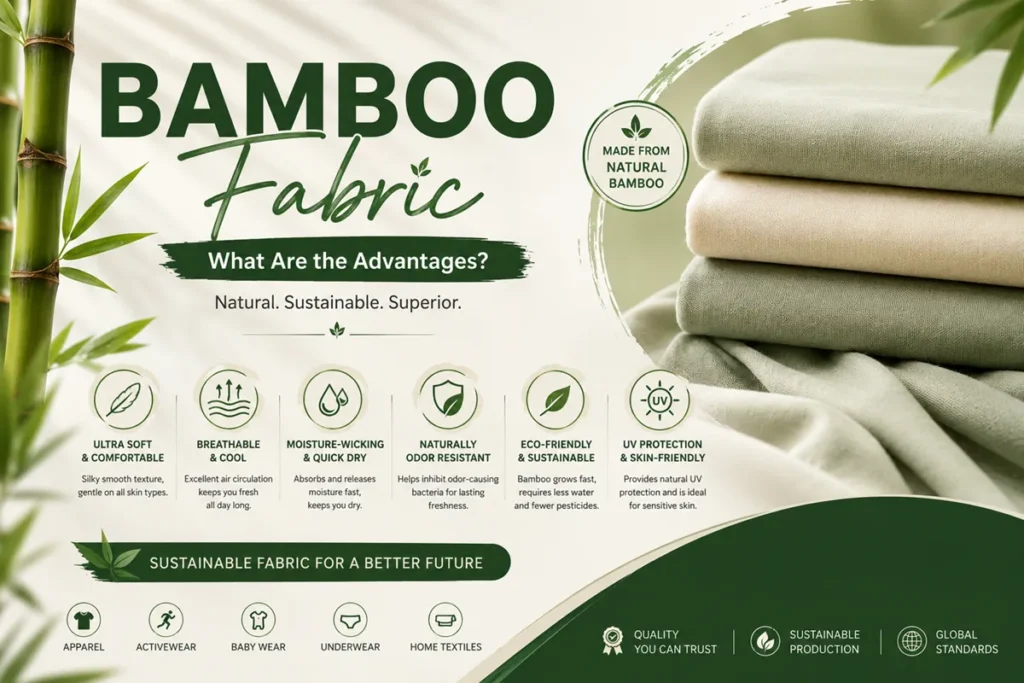
Why Bamboo Fabric Is Becoming a Preferred Choice for Sustainable Fashion
As the global fashion industry shifts toward sustainability, bamboo fabric has emerged as one of the most promising eco-friendly textiles. Known for its exceptional softness, breathability, and environmental benefits, bamboo fabric is increasingly used in apparel, sportswear, baby clothing, underwear, and home textiles.
But what exactly makes bamboo fabric stand out? In this article, we’ll explore the key advantages of bamboo fabric and why more brands are incorporating it into their product collections.
What Is Bamboo Fabric?
Bamboo fabric is a textile made from bamboo plants, one of the fastest-growing renewable resources on Earth. Depending on the manufacturing process, bamboo fibers can be transformed into different types of fabrics, including:
- Bamboo Viscose (Rayon): The most common type, valued for its silky texture and affordability.
- Bamboo Lyocell: Produced using a closed-loop manufacturing process that recycles water and solvents, making it a more environmentally friendly option.
- Bamboo Linen: Made through a mechanical process, retaining the natural structure of bamboo fibers. It is durable but less common due to higher production costs.
Each type offers unique characteristics, but all share many of bamboo’s natural advantages.
1. Exceptional Softness and Comfort
One of the biggest reasons consumers love bamboo fabric is its luxurious softness. Often compared to silk or high-quality cotton, bamboo fabric feels smooth against the skin and provides excellent comfort for everyday wear.
This makes it particularly suitable for:
- T-shirts
- Underwear
- Sleepwear
- Baby clothing
- Activewear
The natural softness remains even after repeated washing when proper care instructions are followed.
2. Excellent Breathability
Bamboo fibers contain microscopic gaps that allow air to circulate more efficiently than many synthetic fabrics.
Benefits include:
- Better ventilation
- Reduced heat buildup
- Improved comfort in warm climates
- Less sweating during physical activity
For countries with tropical weather, bamboo apparel offers superior comfort throughout the day.
3. Superior Moisture-Wicking Performance
Bamboo fabric absorbs and releases moisture quickly, helping keep the wearer dry.
Compared to traditional cotton, bamboo fabric often dries faster and maintains a fresher feel during extended wear.
This makes bamboo ideal for:
- Sportswear
- Yoga apparel
- Running clothing
- Outdoor garments
4. Naturally Odor Resistant
Although the antibacterial claims surrounding bamboo fabrics depend on the manufacturing process, bamboo textiles are generally effective at managing moisture, which helps reduce the conditions that cause unpleasant odors.
For consumers, this means:
- Fresher clothing
- Less odor after daily wear
- Greater comfort during exercise
5. Hypoallergenic and Skin-Friendly
People with sensitive skin often prefer bamboo clothing because of its smooth fibers and gentle texture.
Bamboo fabric is commonly used for:
- Infant clothing
- Medical garments
- Sensitive-skin apparel
- Pajamas
- Bedding
Its silky surface reduces friction and enhances wearing comfort.
6. UV Protection
Some bamboo fabrics offer a degree of natural UV protection, helping reduce exposure to harmful ultraviolet rays. While the exact protection level varies depending on fabric construction and finishing, bamboo garments can contribute to greater outdoor comfort.
7. Eco-Friendly and Renewable
One of bamboo’s strongest selling points is its environmental sustainability.
Bamboo plants:
- Grow extremely fast
- Require little irrigation
- Can regenerate naturally after harvesting
- Often need fewer pesticides than conventional crops
These characteristics make bamboo an attractive renewable resource for textile production.
However, it’s important to note that the environmental impact also depends on how the fibers are processed. Closed-loop methods such as bamboo lyocell generally have a lower environmental footprint than conventional viscose production.
8. Biodegradable Potential
Natural bamboo fibers are biodegradable under suitable conditions, making them a more sustainable alternative to many petroleum-based synthetic fibers.
As consumers become increasingly concerned about textile waste, biodegradable materials are gaining popularity across the fashion industry.
9. Beautiful Drape and Premium Appearance
Bamboo fabric naturally drapes well and has a subtle sheen that creates an elegant appearance.
It is frequently used for:
- Premium T-shirts
- Dresses
- Casual fashion
- Luxury loungewear
- Fashion collections
Many brands appreciate bamboo fabric because it combines comfort with a refined look.
10. Versatility Across Multiple Applications
Bamboo textiles are suitable for a wide variety of products, including:
- Fashion apparel
- Sportswear
- Uniforms
- Baby products
- Towels
- Bedding
- Socks
- Underwear
- Home textiles
Its versatility makes bamboo fabric an attractive choice for both emerging and established fashion brands.
Are There Any Limitations?
While bamboo fabric offers numerous advantages, there are also some considerations:
- Premium bamboo fabrics can be more expensive than conventional cotton.
- Some bamboo viscose production methods involve chemical processing, making responsible sourcing important.
- Care instructions should be followed carefully to preserve softness and durability.
Brands should work with reliable manufacturers that prioritize quality and environmentally responsible production practices.
Why Fashion Brands Are Choosing Bamboo Fabric
The growing demand for sustainable fashion has encouraged brands worldwide to adopt environmentally responsible materials. Bamboo fabric offers a compelling combination of comfort, performance, and sustainability, making it a valuable option for modern apparel collections.
Consumers today increasingly seek clothing that is:
- Comfortable
- Breathable
- Eco-friendly
- Durable
- Stylish
Bamboo fabric successfully meets all of these expectations, making it one of the fastest-growing materials in the textile industry.
Conclusion
Bamboo fabric has become a leading choice for sustainable apparel thanks to its exceptional softness, breathability, moisture management, and renewable origins. Whether used in casual wear, sportswear, baby clothing, or premium fashion, bamboo textiles offer both performance and environmental benefits.
As sustainability continues to shape the future of the apparel industry, bamboo fabric is expected to play an increasingly important role in helping brands create high-quality products while reducing their environmental impact.