
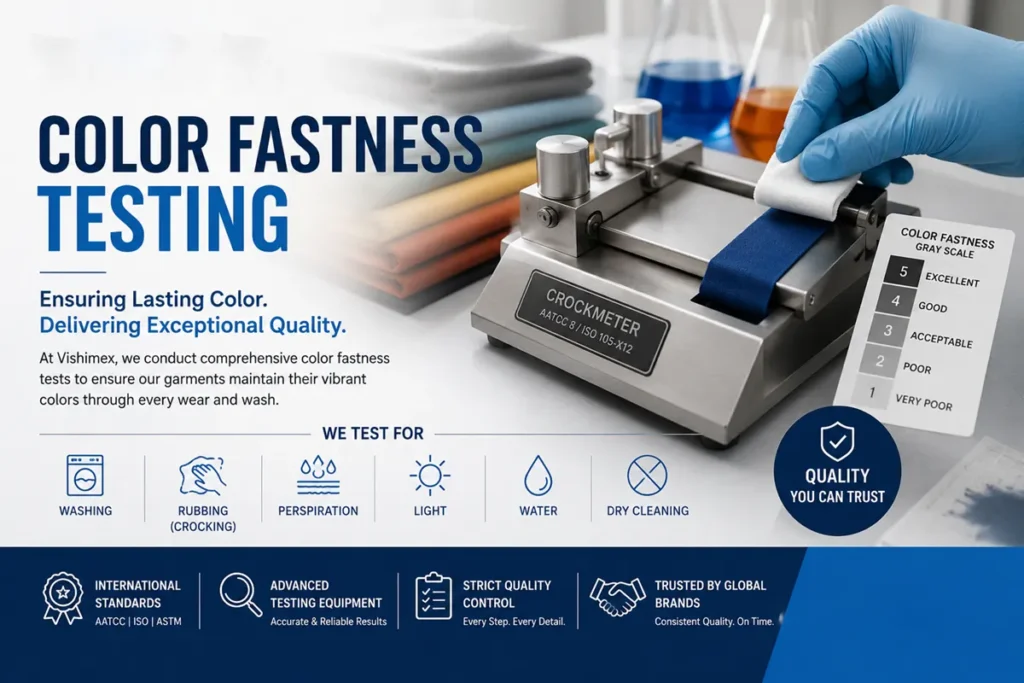
Color is one of the first things customers notice when purchasing clothing. A garment with vibrant colors creates a positive impression, but if those colors fade, bleed, or transfer after washing or wearing, customer satisfaction quickly declines. This is why color fastness testing is an essential part of quality control in the garment manufacturing industry.
At Vishimex, we understand that maintaining consistent color quality is critical for global apparel brands. Our manufacturing process includes comprehensive color fastness testing to ensure every product meets international quality standards before shipment.
What Is Color Fastness?
Color fastness refers to a fabric’s ability to retain its original color without fading or transferring when exposed to different conditions, including:
- Washing
- Rubbing
- Perspiration
- Sunlight
- Dry cleaning
- Water exposure
- Heat and ironing
High color fastness ensures that garments continue to look new after repeated use and care.
Why Is Color Fastness Testing Important?
1. Ensures Customer Satisfaction
Consumers expect their clothing to maintain its appearance after multiple washes. Poor color fastness can result in:
- Fading colors
- Dye transfer onto other garments
- Uneven color patches
- Customer complaints and product returns
Reliable testing helps brands deliver products that meet customer expectations.
2. Protects Brand Reputation
For fashion brands, product quality directly affects brand image. Garments with poor color performance may lead to negative reviews, increased warranty claims, and loss of customer trust.
Color fastness testing minimizes these risks by verifying product performance before distribution.
3. Meets International Standards
Many retailers and global brands require suppliers to comply with internationally recognized testing standards, such as:
- ISO Standards
- AATCC (American Association of Textile Chemists and Colorists)
- ASTM International
- Buyer-specific quality requirements
Meeting these standards helps manufacturers qualify for international markets.
Common Types of Color Fastness Tests
1. Color Fastness to Washing
This test evaluates how well a fabric retains its color after repeated laundering.
The fabric is washed under controlled laboratory conditions that simulate household washing. Afterward, technicians evaluate:
- Color fading
- Color transfer to adjacent fabrics
This is one of the most commonly required tests for apparel products.
2. Color Fastness to Rubbing (Crocking)
During everyday wear, fabric surfaces rub against skin, bags, furniture, and other clothing.
This test measures whether dye transfers through friction under:
- Dry rubbing
- Wet rubbing
Dark-colored garments typically require stricter rubbing fastness performance.
3. Color Fastness to Perspiration
Sportswear and activewear are regularly exposed to sweat.
This test simulates human perspiration under acidic and alkaline conditions to determine whether colors remain stable during wear.
It is especially important for:
- Sportswear
- Uniforms
- Outdoor apparel
- Children’s clothing
4. Color Fastness to Light
Ultraviolet (UV) rays gradually degrade textile dyes.
Light fastness testing exposes fabrics to artificial sunlight for an extended period and compares any color change against standard reference scales.
Products commonly requiring this test include:
- Outdoor clothing
- Sports apparel
- Workwear
- Curtains
- Home textiles
5. Color Fastness to Water
This test evaluates the stability of dyes after prolonged contact with water.
It is particularly relevant for:
- Swimwear
- Rainwear
- Outdoor garments
- Functional fabrics
6. Color Fastness to Dry Cleaning
Certain premium garments are designed exclusively for dry cleaning.
This test ensures that dry-cleaning solvents do not cause:
- Color fading
- Dye migration
- Color staining
How Color Fastness Is Evaluated
After testing, technicians compare the fabric with standardized gray scales.
Results are typically rated on a 1–5 scale:
| Rating | Performance |
|---|---|
| Grade 5 | Excellent |
| Grade 4 | Good |
| Grade 3 | Acceptable |
| Grade 2 | Poor |
| Grade 1 | Very Poor |
Most international apparel buyers require Grade 4 or above for key performance tests, depending on the product category and end use.
Factors Affecting Color Fastness
Several factors influence how well a fabric retains its color:
Fabric Type
Natural and synthetic fibers absorb dyes differently.
Dye Quality
Premium dyes generally provide better color stability than lower-quality alternatives.
Dyeing Process
Proper dyeing temperature, pH, and fixation significantly improve color retention.
Finishing Treatments
Chemical finishes can enhance or reduce color fastness depending on the application.
Washing Conditions
Detergents, water temperature, and washing frequency all affect long-term color performance.
Vishimex’s Commitment to Quality
At Vishimex, quality assurance is integrated into every stage of production. Our quality control team conducts comprehensive testing to ensure garments consistently meet customer specifications and international standards.
Our quality process includes:
- Fabric inspection before production
- In-process quality control
- Color fastness testing
- Dimensional stability testing
- Garment measurements
- Final product inspection before shipment
By maintaining strict quality control procedures, we help our global partners reduce defects, improve customer satisfaction, and strengthen their brand reputation.
Conclusion
Color fastness testing is much more than a laboratory procedure—it is a critical safeguard for product quality and customer satisfaction. By evaluating how fabrics perform under washing, rubbing, perspiration, sunlight, and other real-world conditions, manufacturers can deliver garments that maintain their appearance throughout their lifecycle.
At Vishimex, we are committed to producing export-quality garments with reliable color performance, ensuring that every product meets the expectations of international buyers and end consumers alike.
Looking for a reliable garment manufacturing partner in Vietnam? Contact Vishimex today to learn how our comprehensive quality control process can support your apparel business with consistent, high-quality production.