
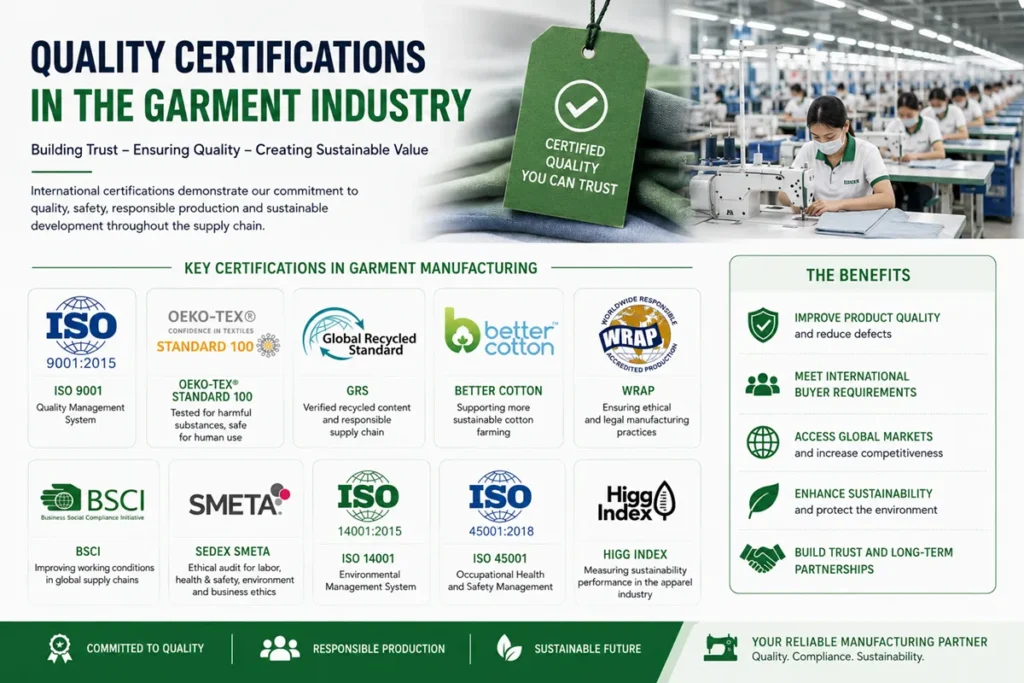
Quality certifications have become a critical requirement in today’s global apparel industry. International brands and retailers no longer evaluate suppliers based solely on production capacity or competitive pricing. They also expect manufacturers to comply with internationally recognized standards for quality management, social responsibility, environmental sustainability, and product safety.
For garment manufacturers seeking long-term partnerships with global brands, obtaining the right certifications demonstrates credibility, enhances operational efficiency, and strengthens market competitiveness.
This article explores the most important quality certifications in the garment industry and explains why they matter to both manufacturers and buyers.
Why Quality Certifications Matter
Quality certifications provide independent verification that a manufacturer follows internationally accepted standards throughout its operations. They help:
- Improve product consistency
- Reduce manufacturing defects
- Build customer confidence
- Meet buyer compliance requirements
- Access premium international markets
- Strengthen brand reputation
- Increase operational efficiency
Many leading fashion brands—including Nike, Adidas, H&M, Uniqlo, Zara, and Decathlon—require suppliers to maintain specific certifications before placing production orders.
1. ISO 9001 – Quality Management System
Purpose:
ISO 9001 is the world’s most recognized quality management standard. It ensures that a company consistently delivers products that meet customer expectations while continuously improving its processes.
Key Benefits
- Standardized production procedures
- Better process control
- Improved customer satisfaction
- Reduced production errors
- Continuous improvement culture
For garment manufacturers, ISO 9001 demonstrates that quality is managed systematically rather than relying solely on final inspections.
2. OEKO-TEX® STANDARD 100
Purpose:
OEKO-TEX® STANDARD 100 certifies that textile products have been tested for harmful substances and are safe for human use.
Products are tested for:
- Heavy metals
- Formaldehyde
- Pesticides
- Harmful dyes
- Allergens
- Toxic chemicals
This certification is particularly important for:
- Children’s clothing
- Baby garments
- Underwear
- Sportswear
- Home textiles
Many European buyers require OEKO-TEX certification before importing textile products.
3. Global Recycled Standard (GRS)
The Global Recycled Standard verifies recycled content throughout the supply chain while also assessing environmental practices, chemical management, and social responsibility.
GRS-certified products typically include:
- Recycled polyester
- Recycled nylon
- Recycled cotton
- Sustainable textile blends
As consumers increasingly demand environmentally responsible products, GRS certification has become highly valuable for apparel exporters.
4. Better Cotton Certification
Better Cotton promotes more sustainable cotton farming practices worldwide.
Its objectives include:
- Reducing water consumption
- Lowering pesticide use
- Improving soil health
- Supporting farmers’ livelihoods
Many international brands prefer suppliers that source Better Cotton-certified materials as part of their sustainability commitments.
5. WRAP (Worldwide Responsible Accredited Production)
WRAP focuses on ethical and socially responsible manufacturing.
It evaluates factories based on principles such as:
- Legal compliance
- Fair wages
- Safe working conditions
- No forced labor
- No child labor
- Environmental responsibility
- Workplace health and safety
WRAP certification is widely recognized throughout the global apparel supply chain.
6. BSCI (Business Social Compliance Initiative)
BSCI is one of the most requested social compliance programs in Europe.
It helps ensure factories provide:
- Fair working hours
- Safe workplaces
- Ethical labor practices
- Freedom of association
- Fair compensation
Many European retailers request BSCI audits before approving new suppliers.
7. Sedex SMETA Audit
Sedex is not a certification but a globally recognized ethical audit methodology.
SMETA evaluates four key pillars:
- Labor standards
- Health and safety
- Environmental practices
- Business ethics
Many international buyers accept SMETA audits as part of their supplier approval process.
8. ISO 14001 – Environmental Management System
ISO 14001 demonstrates that a manufacturer effectively manages its environmental responsibilities.
The standard helps companies:
- Reduce pollution
- Improve waste management
- Lower energy consumption
- Enhance environmental performance
- Comply with environmental regulations
As sustainability becomes increasingly important, ISO 14001 is often considered a strategic investment.
9. ISO 45001 – Occupational Health and Safety
ISO 45001 focuses on creating a safe and healthy workplace.
It helps manufacturers:
- Prevent workplace accidents
- Reduce occupational risks
- Improve employee well-being
- Strengthen safety management systems
Safe workplaces contribute to higher productivity and stronger employee engagement.
10. Higg Index
Developed by the Sustainable Apparel Coalition, the Higg Index measures sustainability performance across the apparel supply chain.
It evaluates:
- Environmental impact
- Social responsibility
- Facility operations
- Product sustainability
Many global fashion brands use Higg assessments when selecting manufacturing partners.
How Buyers Evaluate Certified Suppliers
International buyers often consider certifications as indicators of a supplier’s overall capability. During supplier evaluations, they typically review:
- Production capacity
- Quality management systems
- Social compliance
- Environmental responsibility
- Product safety
- Supply chain transparency
- Delivery performance
Manufacturers with internationally recognized certifications generally have a competitive advantage during supplier selection.
Choosing the Right Certifications
Not every manufacturer needs every certification. The appropriate certifications depend on the target market and product category.
| Business Goal | Recommended Certifications |
|---|---|
| Improve quality management | ISO 9001 |
| Export to Europe | OEKO-TEX®, BSCI, Sedex |
| Sustainable products | GRS, Better Cotton |
| Green manufacturing | ISO 14001 |
| Worker safety | ISO 45001 |
| Ethical manufacturing | WRAP, Sedex |
| Premium international brands | Combination of ISO 9001, WRAP, OEKO-TEX®, GRS, and BSCI |
Conclusion
Quality certifications are no longer optional—they are becoming essential for garment manufacturers competing in the global market. Beyond meeting buyer requirements, these certifications help improve operational efficiency, strengthen brand reputation, and support long-term business growth.
As international buyers continue to prioritize quality, sustainability, ethical manufacturing, and transparency, investing in recognized certifications enables manufacturers to build trust, access new markets, and establish lasting partnerships with leading global brands.
For companies aiming to become reliable OEM or ODM partners, developing a comprehensive certification strategy is one of the smartest long-term investments in today’s competitive apparel industry.